
A lot of artists think the choice between online mastering vs attended mastering is really a question of quality. Most of the time, it is not. The better question is how you work best, how final your mix really is, and how much real-time feedback your project needs before release.
That distinction matters because both options can produce excellent masters when the engineer, room, monitoring, and workflow are right. What changes is the communication style, the pace of decisions, and how hands-on you want to be during the session.
Online mastering vs attended mastering: what actually changes?
At the technical level, the goal is the same. You want a master that translates, holds together across playback systems, meets delivery specs, and supports the emotional impact of the mix. Whether that happens while you sit in the room or through a remote approval process, the mastering engineer is still making judgment calls about tone, dynamics, stereo image, sequencing, spacing, and final output formats.
The difference is in how those choices are reviewed.
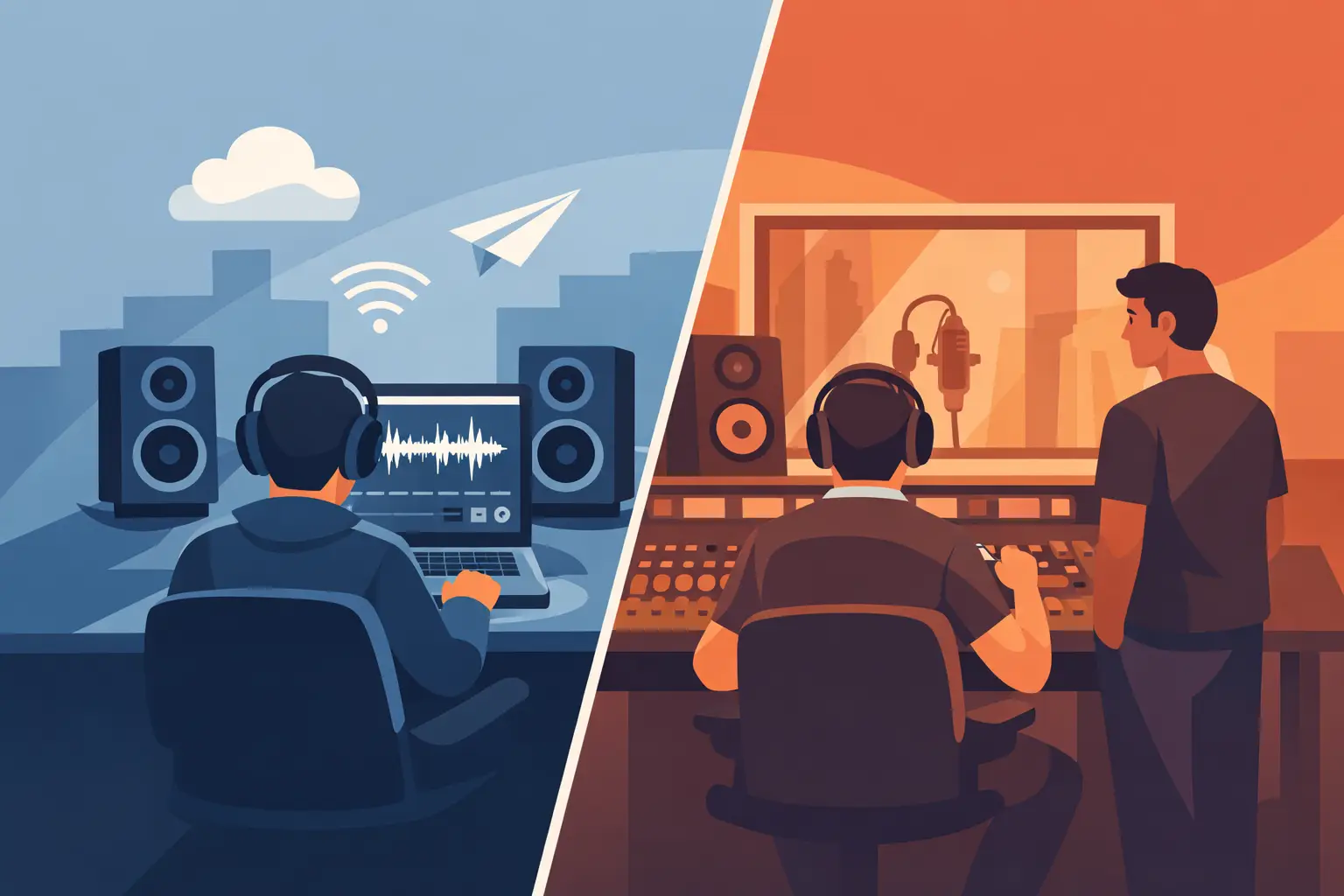
With online mastering, you send your mix, notes, and references, then the engineer evaluates the material and builds the master offline. You review a proof or sample, request revisions if needed, and approve final files once everything is right. This is now the most practical option for many artists, producers, and labels because it removes geography from the equation and gives you time to listen carefully on your own systems before signing off.
With attended mastering, you are present during the session, either in person or sometimes in a live remote format depending on the studio. You hear adjustments as they happen and can respond immediately. That can be valuable when a project has nuanced artistic goals, multiple stakeholders, or unresolved mix questions that are easier to sort out in real time.
When online mastering is the better choice
Online mastering works especially well when your mixes are already in strong shape and you want expert finishing without turning the session into a back-and-forth production meeting. If your balances are set, your revisions are mostly done, and you need a trusted second set of ears to finalize the project, remote mastering is often the cleanest path.
It also gives you one major advantage that artists underestimate: perspective. When a preview comes back, you can step away from the emotion of the session and listen in your own environment. You can compare the master on studio monitors, headphones, the car, and everyday speakers before approving it. That tends to lead to better feedback than making every decision on the spot.
For independent artists and producers working on deadlines, online mastering is usually the more efficient workflow. You upload files, include notes about your vision and release targets, and let the engineer focus. If the studio offers a structured process with mix evaluation, sample proofs, revisions, and final deliverables for streaming, CD/DDP, Apple Digital Masters, high-resolution formats, or vinyl pre-master preparation, you still get strong quality control without needing to attend.
This is also the best fit when you value direct engineer communication but do not need to physically sit in on the work. A good online process should not feel distant. It should feel organized, responsive, and clear.
When attended mastering makes more sense
Attended mastering is usually the better option when the project is still asking questions. Maybe the low end feels close but not fully settled. Maybe there are two mix versions and you are not sure which one translates better. Maybe a producer, artist, and label rep all need to align on tone and loudness in one session.
In those situations, real-time collaboration can save time. Instead of sending notes across several rounds, everyone hears the same changes at once. You can react immediately to a half dB move in the vocal range, a slightly tighter low end, or a different spacing between songs on an EP or album.
Attended sessions can also be useful for artists who are new to mastering and want to understand what is happening. Hearing the process in a tuned room with a skilled engineer can be educational. You learn what the mix is doing well, what the master can improve, and where mastering should stop so it does not turn into mix repair.
That said, attended mastering is not automatically better just because you are present. Sometimes being in the room leads to too many fast decisions, too much second-guessing, or an urge to tweak details that are not actually improving translation. Good mastering still depends on trust.
The biggest trade-off is not sound. It is workflow.
This is where artists often get clarity. If you are comparing online mastering vs attended mastering, the main trade-off is usually workflow, not sonic potential.
Online mastering favors focus, flexibility, and review time. It lets the engineer work without interruption and lets you assess the result with fresh ears. It is ideal for clients who want a streamlined process, fast turnaround, and clear revision points.
Attended mastering favors immediacy and interaction. It is best when the project benefits from live discussion or when multiple decision-makers need to be present. That can speed things up, but only if everyone arrives prepared and the mix is genuinely close to finished.
If your mix still needs heavy fixing, neither option is a shortcut. Mastering can enhance tone, glue, depth, punch, and consistency, but it cannot fully solve a muddy arrangement, harsh vocal chain, unstable bass relationship, or over-limited mix bus. The more honest the pre-master evaluation, the better the result.
How to decide which process fits your project
Start with your mix status. If the song is finished, printed cleanly, and you mainly want an objective expert ear to deliver release-ready masters, online mastering is often the right call. If you are still uncertain about key tonal or version decisions, attended mastering may be worth it.
Next, think about communication style. Some artists give excellent written notes and prefer to review on their own timeline. Others make better decisions by hearing changes live and talking through them in the moment. Neither approach is more serious or more professional. It is about which method gets you to a confident approval faster.
Then consider deliverables. A single streaming release may not require much live interaction if the mix is solid. A full album with sequencing, spacing, level relationships, metadata, DDP creation, alternate formats, and possible vinyl considerations has more moving parts. That does not automatically require attendance, but it does raise the value of a studio with a transparent process and direct engineer access.
Finally, be honest about your own decision-making habits. If you tend to overthink in sessions, online review may help you make better choices. If you know you need live back-and-forth to feel certain, attended may reduce revision loops.
What to look for either way
The quality of the mastering service matters more than the format. You want an engineer with experience, a monitoring chain you can trust, and a process that protects the release from avoidable mistakes.
That means mix evaluation before mastering, not after problems are baked in. It means clear file requirements, proper headroom, and no unnecessary limiters on the mix bus unless they are intentional and approved. It means proofing before final delivery, revision support, and deliverables that match your release plan rather than a one-size-fits-all export.
If analog tone matters to you, ask whether the studio has a genuine analog mastering path or simply analog-modeled plugins. If release compliance matters, make sure they can provide the right assets for streaming, manufacturing, Apple Digital Masters, high-resolution formats, or vinyl prep when needed. And if communication matters, make sure you are speaking directly with the engineer who is doing the work.
Studios like LB-Mastering build trust by combining that engineer-led process with previews, revisions, and modern file delivery, which is exactly what serious artists need when they are trying to avoid surprises at release time.
Online mastering vs attended mastering: the right answer is project-specific
If your mix is strong and you want efficient, high-level finishing with room to review calmly, online mastering is often the smarter choice. If the project needs live collaboration, immediate approvals, or group decision-making, attended mastering can be the better fit.
Neither option is the "pro" choice by default. The professional move is choosing the workflow that helps you make better decisions and gets the song over the finish line without adding confusion.
If you are unsure, ask for a mix evaluation first. The answer usually shows up there. A good engineer can tell you whether your project is ready for a streamlined remote process or whether it would benefit from real-time collaboration before the final master is printed.