
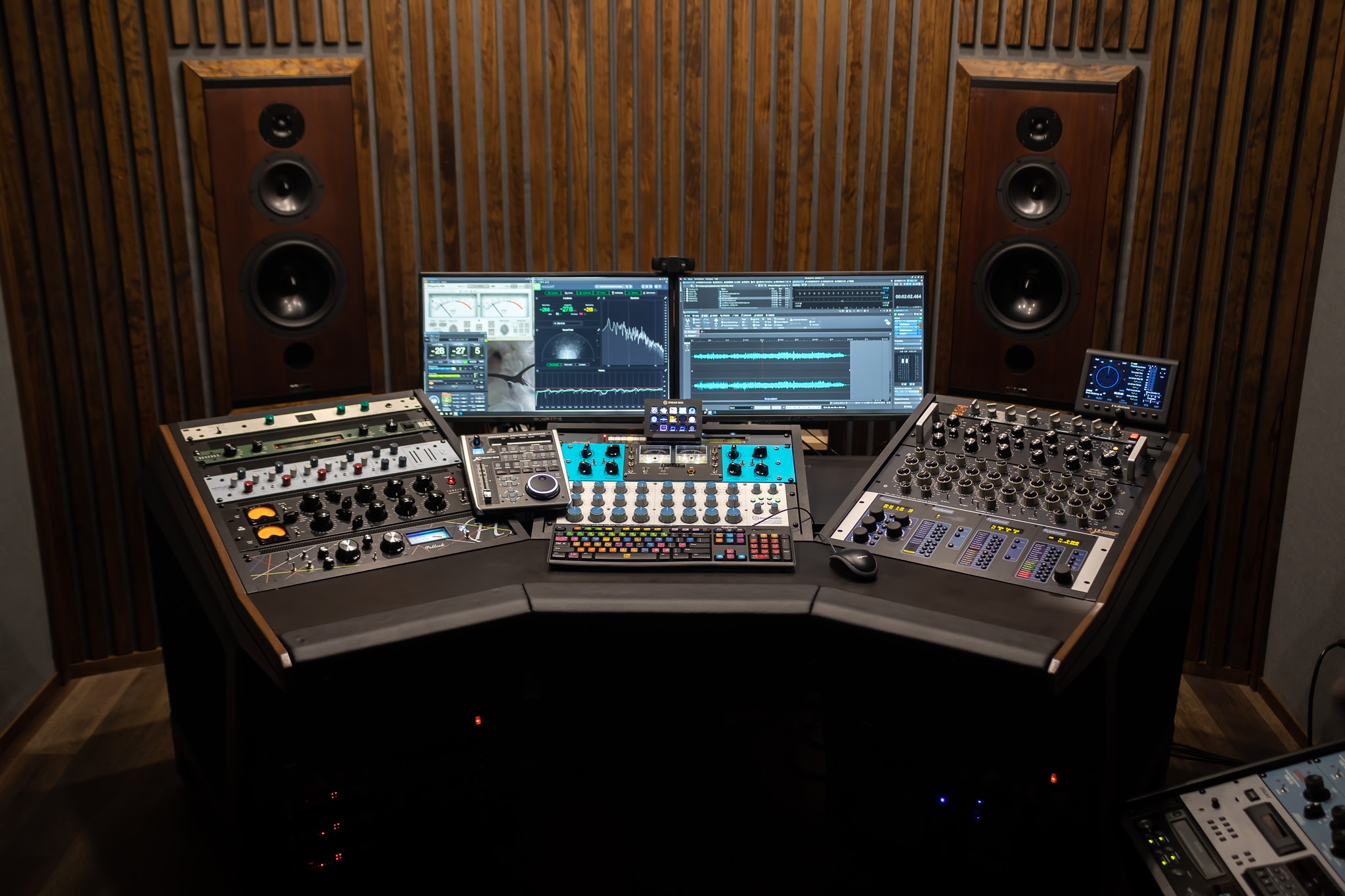


Most mastering problems start before mastering starts.
A mix comes in sounding exciting, but the stereo bus is pinned, the limiter is doing the heavy lifting, and every chorus is already flattened. At that point, the question is no longer how much headroom for mastering - it is how much room is left to improve anything at all.
If you want a clear answer, here it is first: leave enough headroom so your loudest peak lands around -3 dBFS to -6 dBFS, and do not put a limiter on your mix bus unless it is part of the sound and you are sending a second version without it. That range gives a mastering engineer room to work without forcing you to mix too quietly or unnaturally.
That said, headroom is only part of the story. A mix with 6 dB of headroom can still be hard to master if the low end is bloated, the vocal is harsh, or the stereo bus is over-compressed. A mix peaking at -2 dBFS can still master well if it is clean, balanced, and dynamic. So the right answer is practical, not dogmatic.
How much headroom for mastering is actually needed?
The old rule that every mix must peak at exactly -6 dBFS gets repeated a lot, but it is more of a safe guideline than a law. In modern digital workflows, a mastering engineer can turn a file down easily as long as it has not clipped and the mix bus processing has not boxed the track in.
What matters most is that the file is not clipping, not limited to the point of distortion, and not so hot that transient detail is already damaged. If your peaks are living somewhere between -3 dBFS and -6 dBFS, you are in a very workable zone. If they are a little lower, that is fine too. If they are sitting at -0.1 dBFS because you were chasing loudness during mixing, that is where trouble usually starts.
For most clients, the simplest advice is this: export the clean mix at its native resolution, leave the stereo bus unclipped, and give the mastering stage room to make the final level decisions.
Why headroom matters more than people think
Headroom is not just empty space on a meter. It is the margin that keeps your transients intact and your options open.
When a mix is pushed too hard before mastering, the kick and snare often lose impact first. Then the vocal starts feeling crowded because there is no space left for subtle EQ moves or level shaping. Low-end buildup also becomes harder to control when the mix bus compressor and limiter are already reacting aggressively. You may still have a loud file, but loud is not the same as finished.
A proper mastering pass can add size, glue, tone, and competitive level. But it works best when the mix still breathes. That is especially true if you want an analog mastering approach, where the chain is designed to enhance depth, punch, and musicality rather than just shave peaks.
Headroom vs loudness: these are not the same thing
A lot of confusion comes from treating headroom and loudness as if they mean the same thing. They do not.
Headroom is about peak level and available space before clipping. Loudness is about perceived level over time. You can have a mix with decent headroom that still sounds dense and loud because of arrangement, compression, saturation, and balance. You can also have a mix with very little headroom that does not actually sound powerful - it just sounds squeezed.
This is why chasing final release loudness during the mix stage usually backfires. If the record needs to hit hard, that decision should be made at the end, once the tonal balance and dynamics are under control. Otherwise, you are locking in compromises too early.
When -6 dBFS is useful and when it is not
There is a reason engineers still mention -6 dBFS so often. It is easy to remember, it keeps people out of clipping territory, and it usually means the mix bus is not being overdriven. For that reason alone, it is a good target.
But if your mix peaks at -4 dBFS and sounds excellent, there is no technical problem. If it peaks at -8 dBFS and sounds excellent, there is no problem there either. The mastering engineer can adjust gain. What they cannot restore easily is transient punch that has already been crushed or distortion that has already been printed into the file.
So if you are asking how much headroom for mastering, think in terms of a healthy range instead of a single exact number. The safest range for most projects is -3 dBFS to -6 dBFS peak, with no clipping and no unnecessary limiting.
What to avoid on your mix bus
If you want the best mastering result, the mix bus should stay honest.
EQ and compression that are truly part of your sound can be fine. Many mixers build into bus processing from the start, and that can produce great results. The problem is not processing itself. The problem is processing that exists only to make the rough mix louder or more impressive for the moment.
Brickwall limiting is the biggest issue. If your limiter is catching occasional peaks gently and you love what it is doing, send that version for reference - but also send a version without the limiter. The un-limited file gives the mastering engineer room to shape the final level properly.
Also avoid clipping plugins on the stereo bus unless you are absolutely sure they are essential to the mix character. A clipped mix may sound exciting at first, but once that damage is printed, your options get narrow fast.
The better question: is the mix master-ready?
A master-ready mix is not defined by one meter reading. It is defined by translation, balance, and control.
If the vocal sits right without being painfully bright, if the low end is solid without clouding the mix, if the snare still cracks, and if the chorus lifts without collapsing into distortion, you are close. At that point, reasonable headroom is simply the final technical check.
This is where objective evaluation matters. Many artists and producers live with a mix for so long that they stop hearing the issues that will show up immediately during mastering. A fresh set of ears can tell you whether the problem is really headroom or whether it is a buildup around 250 Hz, a splashy top end, or over-compression on the hook.
Best export settings for mastering
Leave the sample rate at the original session rate and export at the highest native bit depth available from your session. Do not upsample just for the sake of it. Do not normalize. Do not convert to MP3. And unless specifically requested for a creative reason, do not dither on export from the mix stage.
If you used bus limiting for vibe, send two versions: one with it and one without it. Label them clearly. That gives the mastering engineer a reference for what you were hearing while preserving a clean path for the final master.
If you are sending stems instead of a stereo mix, the same headroom logic still applies. Each stem should be clean, unclipped, and free from unnecessary loudness processing.
How to tell if you left too little headroom
You usually hear it before you see it.
The mix feels smaller when it gets louder. Cymbals turn brittle. Kicks lose punch. The chorus sounds flat instead of bigger. The limiter on your stereo bus is working harder every time the arrangement opens up. On the meter, peaks may be sitting close to 0 dBFS the whole time, but the bigger warning sign is that the track already sounds maxed out before mastering has even begun.
If that sounds familiar, back off the mix bus chain and rebalance the mix. Pull down the output rather than trying to force excitement through louder processing. A little space now usually leads to a stronger record later.
A practical standard that works
For most songs, send a clean stereo mix peaking around -3 dBFS to -6 dBFS, with no clipping and no brickwall limiter on the mix bus. Keep the session's native sample rate, export a full-resolution WAV or AIFF, and make sure the mix itself is balanced enough that mastering can enhance it instead of rescue it.
That standard works because it is flexible. It respects the fact that every song is different, while still protecting the things that matter most - punch, clarity, depth, and options.
If you want an experienced second opinion before release, LB-Mastering Studios can evaluate your mix and tell you whether the issue is really headroom or something deeper in the balance. Sometimes the best move is not turning the mix down. It is giving the song enough space to become what it is supposed to be.