A master that sounds great on Spotify can still be wrong for CD replication. That catches a lot of artists off guard right before release, usually when they realize a streaming-ready WAV is not the same thing as a production-ready CD master.
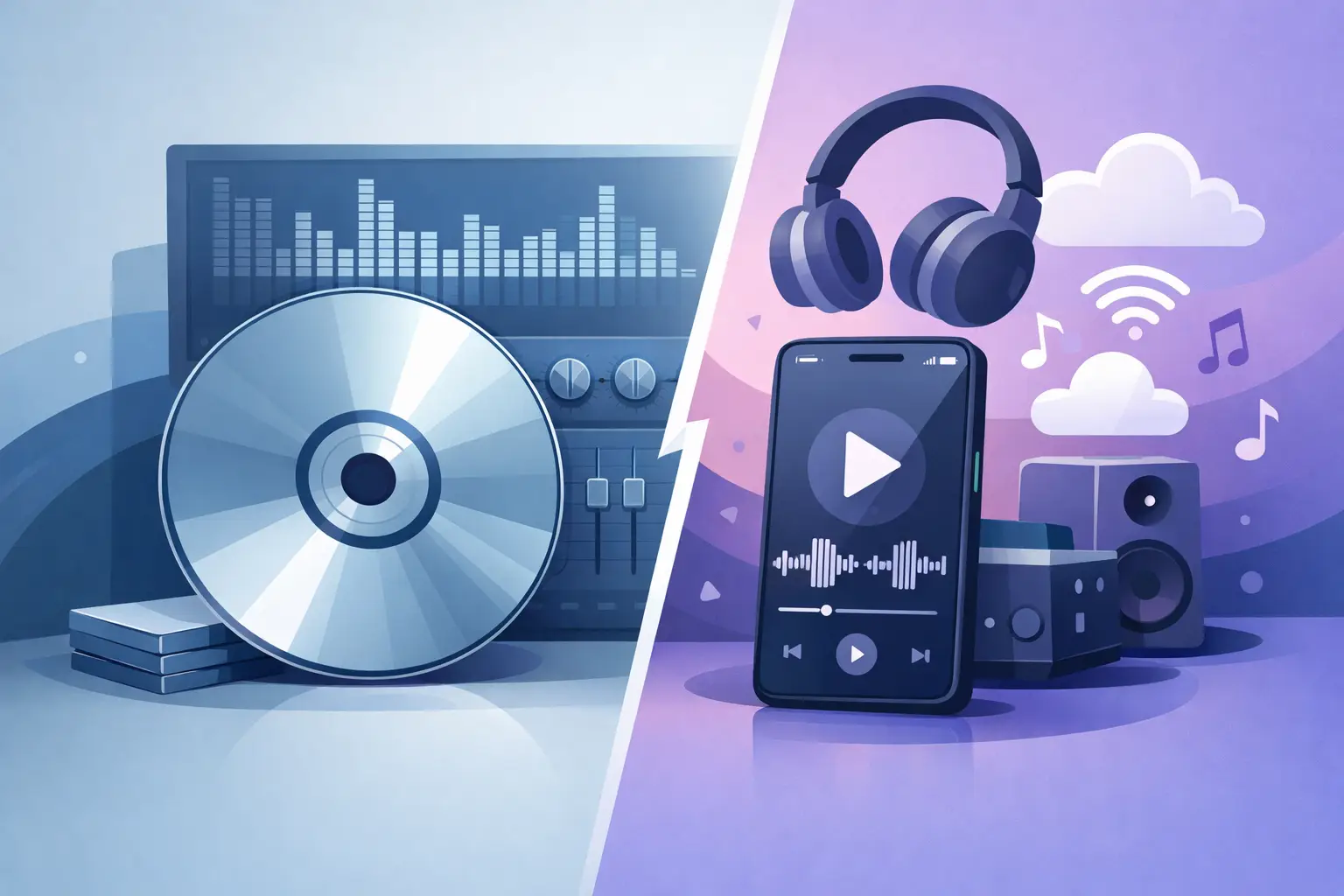
This is where the conversation around cd mastering vs streaming mastering stops being technical trivia and starts affecting your release. If you are putting music on platforms and also manufacturing CDs, the safest move is to prepare each format for the way it is actually played, delivered, and quality-checked.
Why cd mastering vs streaming mastering is not the same job
At a basic level, both formats need the same foundation. The mix has to be solid, the tonal balance has to translate, dynamics need to feel intentional, and the sequence has to support the record. Good mastering is still good mastering.
The difference is in the target. Streaming platforms deliver individual tracks or albums through encoded playback systems, loudness normalization, and a wide range of consumer devices. CD delivery is a fixed, physical format with strict technical requirements, defined sequencing, track markers, spacing, and production-ready data for replication.
That means the engineer is not just making your music sound better. They are also preparing the correct end product. If the release plan includes both formats, there is rarely one perfect file that covers everything without compromise.
Streaming mastering is built around playback behavior
For streaming, the big issue is not simply how loud a song can get. It is how that song behaves once a platform turns it down or re-encodes it. A master that is pushed too hard may feel exciting on first listen, but once normalization reduces the level, what is left can sound flat, harsh, or smaller than a more dynamic master.
This is why streaming mastering often involves a more careful balance between impact and headroom. The goal is competitive energy without damaging the transients, low-end definition, or vocal clarity that help a track hold up across earbuds, phones, laptops, cars, and full-range systems.
There is also the issue of codec conversion. Streaming services do not always play back the exact PCM file you upload. They create delivery versions optimized for their platforms. If the source master is overly bright, clipped, or packed too tightly at the top end, the encoded result can exaggerate those problems.
For many artists, the best streaming master is not the loudest one. It is the one that stays punchy, clear, and emotionally intact after the platform does what it does.
What usually matters most for streaming
A streaming-focused master typically prioritizes translation, controlled peak behavior, and sensible loudness. It also needs clean metadata and properly prepared final files. If you are delivering to multiple digital outlets, consistency matters. A release should feel unified without forcing every song into the exact same loudness profile.
That is especially true for albums and EPs. One song may want more aggression. Another may need room to breathe. Streaming does not erase those artistic choices. It just means they have to survive normalization and encoding.
CD mastering is built around a finished production master
CD mastering has a different set of responsibilities. The audio still needs to sound commercially competitive, but now you are preparing a format with fixed playback specs and manufacturing requirements.
This is where sequence timing, fades, spacing between songs, PQ coding, ISRC placement, and track starts become part of the work. A CD is not just a folder of WAV files. It is a structured program that has to play correctly from beginning to end and be delivered in a format suitable for replication, often as a DDP image rather than loose audio files.
That matters because errors in a CD production master can create real problems later. A slightly wrong gap, a cutoff transition, misplaced metadata, or a bad track marker might not show up until the disc is in hand. At that point, the mistake is expensive.
What usually matters most for CD
With CD, the engineer is paying close attention to continuity across the full program. Song order, relative level, silence between tracks, hidden transitions, and exact indexing all become critical. If you have segues, crossfades, live material, or a continuous album flow, those decisions need to be precise.
Unlike streaming, where listeners often hear one song at a time on shuffled playlists, CD playback tends to preserve the full album experience. That changes how the sequence is judged. The space after track 2 and before track 3 can matter just as much as the EQ curve on either song.
Loudness is part of the difference, but not the whole difference
A lot of people reduce cd mastering vs streaming mastering to one question: which one should be louder? That is too simplistic.
Yes, loudness strategy often changes between formats. A CD does not get turned down by a streaming normalization system, so some releases are mastered a little differently for physical distribution. But louder is not automatically better, and many strong CD masters still preserve plenty of dynamics.
The better question is this: what kind of presentation best serves the format and the music? If a dense rock single needs urgency, the mastering approach may lean one way. If a jazz record, orchestral project, or singer-songwriter album needs depth and natural movement, the approach may be more open in both formats.
In other words, the right answer depends on genre, arrangement, mix quality, and release goals. Any engineer giving you a one-size-fits-all loudness answer is skipping the real work.
When one master can work for both
Sometimes one master can serve both CD and streaming, especially for single releases or simple projects where the tonal balance, dynamics, and level already sit in a strong middle ground. If the sequence is straightforward and there are no special CD production concerns, the same sonic master may be adapted into separate deliverables.
But that does not mean the exact same exported file should be used for every purpose. Even when the sound is shared, the delivery package is not. Streaming assets and CD/DDP assets are still different outputs.
This is why experienced mastering engineers ask about your release plan early. If you tell them you only need files for streaming and later decide to replicate CDs, that can create avoidable extra steps. The cleaner path is to build the project around all intended formats from the start.
Why album sequencing matters more for CD releases
If you are releasing an album on CD, sequencing decisions become part of the mastering conversation in a bigger way. Streaming platforms often encourage track-by-track listening. CDs encourage beginning-to-end listening.
That means transitions need more attention. Does the first song start instantly or after a breath? Should the ballad after the heavy track feel like a reset or a continuation? Is the gap before the closer long enough to create weight without feeling awkward? Those are mastering decisions as much as production decisions.
A good CD master respects the emotional pacing of the record while meeting technical requirements. You are not just finishing songs. You are finishing a program.
Delivery files are where many projects go wrong
One of the most overlooked parts of cd mastering vs streaming mastering is final delivery. Artists often think the session is finished once the approved sound is locked in. In reality, the deliverables are what make the master usable.
For streaming, that may mean properly formatted WAV files prepared for digital distribution, along with the right metadata and naming conventions. For CD replication, it often means a verified DDP image with track order, spacing, codes, and text handled correctly.
This is not glamorous, but it is where release problems are prevented. A strong mastering process includes both the sonic decisions and the quality-control steps that make sure your project is ready for the real world.
At LB-Mastering Studios, that process starts before mastering with mix evaluation and continues through proofing, revisions, and final approved deliverables, so the release is not just polished but properly prepared.
So which one do you need?
If your release is only going to digital platforms, ask for a streaming-focused master. If you are manufacturing CDs, ask for a proper CD production master, not just a set of songs exported at full resolution. If you are doing both, say that upfront so the engineer can prepare the project with both targets in mind.
That is the practical answer, but there is also a creative one. The format should support the way you want the music to land. Streaming is often about translation across countless playback systems. CD is often about presenting a finished record with precision and continuity. Neither is better. They simply ask different things from the master.
The best results come from treating your release like a release, not just a folder of files. If you want a free mastering demo, a free mix evaluation, or a direct conversation about the right deliverables for your project, request a free quote at https://lbmastering.com and get the format right before release day forces the decision.