

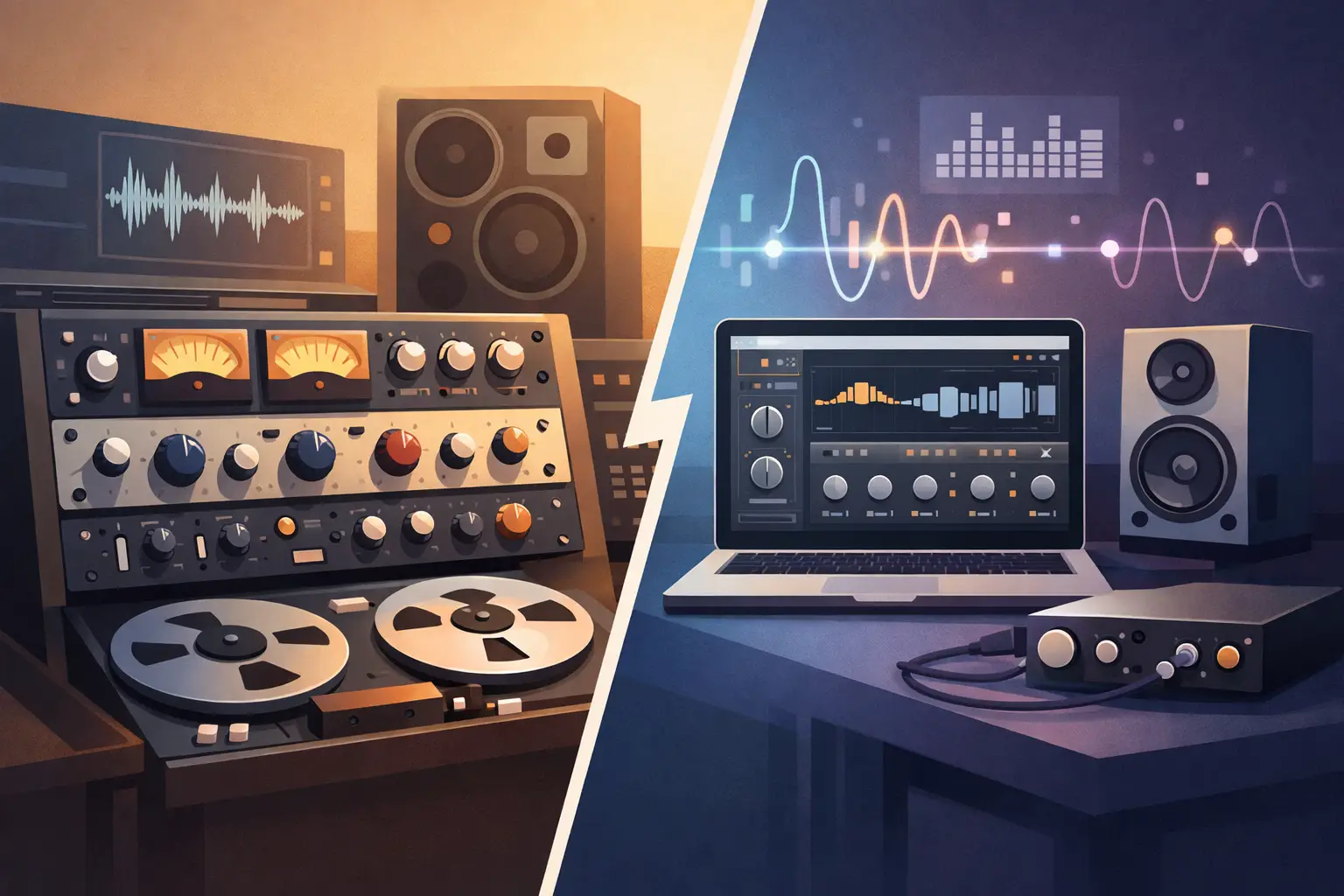
A mix can look perfect on screen and still feel flat the moment you compare it to a finished release. That is where the real question of analog mastering versus plugin mastering starts - not in theory, but in translation, impact, and whether the song still feels like a record after final processing.
For artists, producers, and mix engineers, this is not a debate about old gear versus new software. It is a decision about workflow, tone, recall, revision speed, and how much confidence you want at the last stage before release. Both approaches can produce strong results. The difference is in how they get there, what they emphasize, and what kind of mix benefits most.
Analog mastering versus plugin mastering: what actually changes?
At the highest level, both analog and plugin mastering aim to do the same job. They shape tonal balance, control dynamics, improve depth, and prepare a mix for delivery across streaming, high-resolution files, CD/DDP, or vinyl pre-mastering. The goal is not to remake the mix. The goal is to present it at its best and make sure it holds up everywhere.
The change is in the signal path.
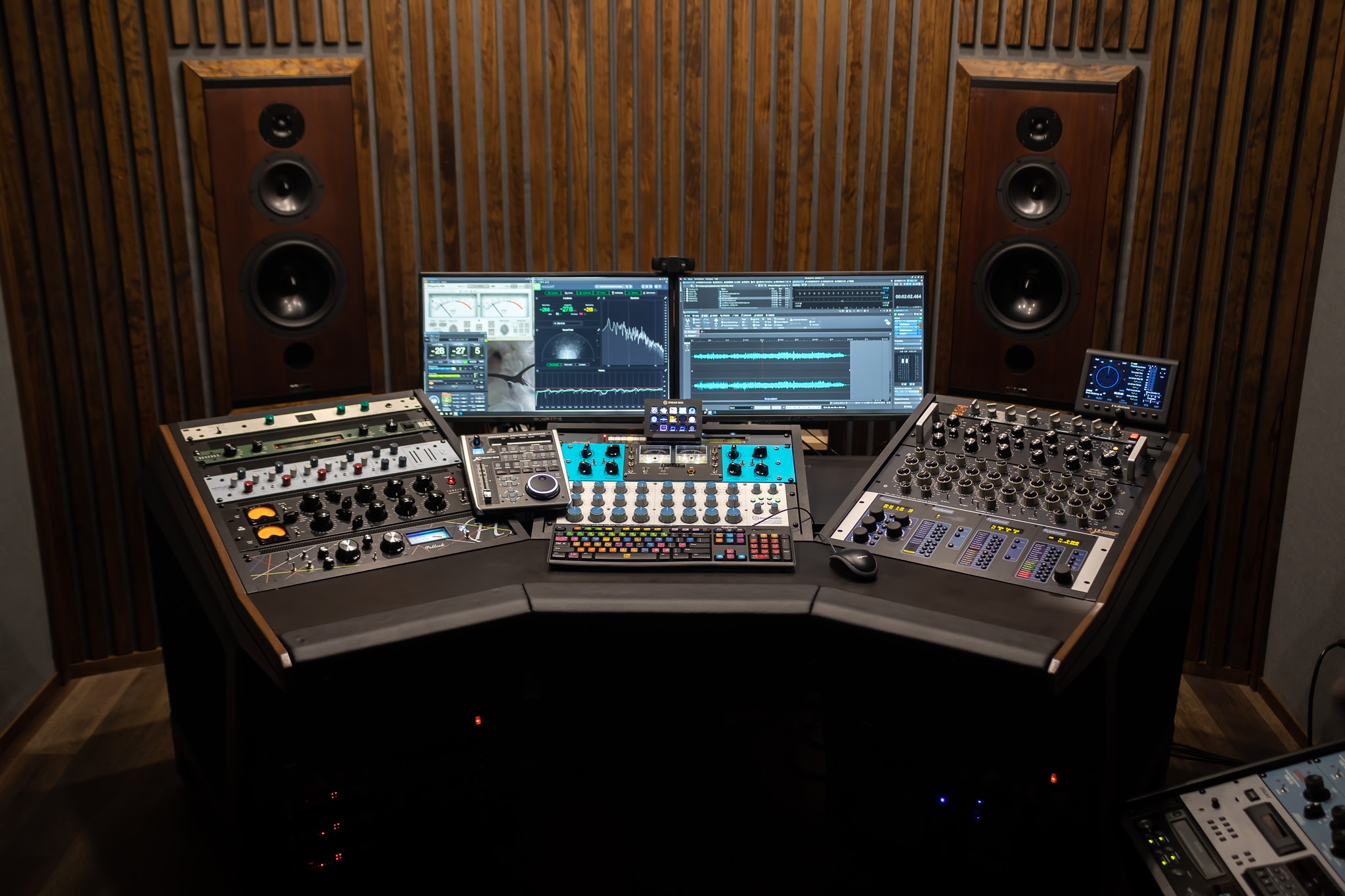
In analog mastering, the mix is sent out of the digital domain through carefully chosen hardware - equalizers, compressors, limiters, and conversion stages - before being captured back into a final master. Those pieces of equipment do not just apply settings. They each have a sonic fingerprint. Sometimes that shows up as added weight in the low end, a smoother top, more dimensional midrange, or a sense that transients feel less brittle and more connected.
In plugin mastering, the entire chain remains inside the computer. EQ, compression, saturation, limiting, metering, and sequencing all happen in software. That approach offers tremendous control, fast recall, and consistency. A skilled engineer can do excellent work with plugins, especially when the mix is already strong and the project demands quick revisions or strict repeatability.
Why analog still matters in a digital release world
A common misconception is that analog mastering only makes sense if the final format is vinyl or tape. That is not the case. Most modern releases end up as digital files, but the path used to shape those files still affects the result.
What many clients hear from a quality analog chain is not hype or nostalgia. It is density without obvious harshness. It is low end that feels rounder instead of bloated. It is a vocal that stays present without sounding pinned on top of the track. Good analog processing often creates movement and cohesion in a way that feels less clinical, especially on mixes that are already close but need authority.
That said, analog is not magic. If the mix has severe issues, hardware will not hide them. If the vocal is too bright, the kick is inconsistent, or the limiter was printed too hard on the mix bus, those are still real problems. The better the source, the more meaningful the analog advantage becomes.
Where plugin mastering has a real advantage
Plugin mastering is sometimes dismissed too quickly, and that is a mistake. Software tools have become extremely capable. In some cases, they are the better fit.
If a project has a lot of versions, alternate edits, frequent label notes, or strict need for exact recall, plugins are efficient. If a client needs the cleanest possible transparency with minimal coloration, a digital chain can be ideal. For some genres, especially highly controlled electronic productions, the precision of plugin processing can work beautifully.
There is also the issue of speed. When turnaround matters and revisions may happen fast, a plugin-based workflow can move quickly. Settings can be reopened instantly. Match revisions are easy to execute. Consistency across singles, instrumentals, clean versions, and performance tracks can be maintained with less friction.
So if the question is whether plugin mastering can sound professional, the answer is yes. Absolutely. The better question is whether it gives your specific mix the final lift it needs.
Analog mastering versus plugin mastering by sonic character
This is where most clients want a straight answer.
Analog mastering tends to excel when a mix needs depth, glue, punch, and a sense of physicality. Rock, Americana, singer-songwriter, jazz, blues, roots, and many pop productions often respond well to analog hardware because the processing can add body without making the track feel overworked. Drums can feel more solid. Bass can sit deeper. Upper mids can smooth out while staying clear.
Plugin mastering tends to excel when the goal is control, clarity, and exact repeatability. If the mix is already balanced and only needs careful finishing, software can get there with precision. It can also be a strong choice for dense modern productions where tiny tonal moves and detailed automation matter more than analog color.
Neither approach is automatically warmer, louder, wider, or better. Those are oversimplifications. Great mastering is about choices, not mythology. A strong engineer makes decisions based on what the song is asking for, not what a marketing phrase says should happen.
The trade-offs most artists do not hear about
The biggest difference is not simply sound. It is tolerance.
Analog chains can sound more forgiving in a musical way, but they are less about endless tweaking. They reward deliberate moves. Small adjustments matter, and the chain itself influences the result. That is part of the appeal. It also means the engineer needs strong judgment from the start.
Plugin chains invite more options. That can be useful, but it can also lead to over-processing. A mix that needed half a dB of EQ can end up with five processors solving the same problem. More control is not always better control.
Recall matters too. Plugins are instant. Analog recall is possible, but it is a hands-on process. In a professional mastering workflow, that is managed carefully, but it is still different.
Then there is conversion. Analog mastering requires leaving the box and coming back in. With high-end converters, that can be part of the sonic benefit. With lesser conversion, it can become a weakness. So the quality of the room, monitoring, converters, and engineer matters just as much as the hardware itself.
Which mixes benefit most from analog?
If your mix feels a little stiff, a little narrow, or a little sharp even though the balances are good, analog mastering may be exactly what helps. The same goes for mixes that need more authority in the low end or a more connected center image.
It also tends to reward dynamic mixes. If you have left healthy headroom, avoided clipping on the stereo bus, and not printed a limiter that is doing too much, analog gear has room to work. It can shape transients and tone in a way that sounds natural instead of forced.
This is one reason mix evaluation matters before mastering starts. A quick engineer review can tell you whether the mix is ready, whether a revision would help, and whether analog processing is likely to deliver a clear improvement instead of just an expensive gesture.
When plugin mastering is the smarter call
If your release schedule is tight, your project needs many deliverables, or you expect frequent notes across multiple versions, plugin mastering can be the practical choice. It is also smart when the mix already carries the exact color you want and the main task is compliant level management, quality control, sequencing, spacing, fades, and final format preparation.
For independent artists releasing singles consistently, there is real value in a process that is predictable and revision-friendly. The smartest move is not choosing sides. It is choosing the method that protects the music and the deadline.
The better question is who is doing the mastering
The analog versus plugin debate gets too much attention when the real variable is the engineer. Experienced mastering engineers hear problems early, make fewer but better moves, and build a chain around the song instead of forcing the song through a preset philosophy.
That is why direct communication matters. If you can talk to the engineer, send a mix for evaluation, hear a sample, and request revisions based on clear goals, you reduce risk. You also get a result that fits the release instead of a generic treatment.
At LB-Mastering Studios, that engineer-led process is a major part of the value. The gear matters. The workflow matters. But what protects the client most is experienced judgment, proofing before approval, and masters delivered in the formats real releases actually require.
If you are weighing analog mastering versus plugin mastering, do not start with ideology. Start with your mix, your timeline, your release format, and the sound you are chasing. The right mastering path is the one that makes your track feel finished the moment it leaves the speakers.